|
| |
|

File No.:
Battle Study # 11
Title:
84 enlisted men and NCO' s of "B"
Battery,
285th Field Artillery Observation
Battalion;
1 Military Police man;
1 enlisted man from the 86th
Engineer Battalion;
10 enlisted men from the 575th and
546th Ambulance Companies;
8 enlisted men from the 32nd Armored
Reconnaissance Battalion;
2 enlisted men from the 200th Field
Artillery Battalion and
1 NCO from the 23rd Infantry
Regiment
Investigation made at:
Baugnez, Belgium & Dachau, Germany
Period Covered:
December 17, 1944
Date: February, 2008
Case Classification: US
soldiers killed by SS troops after
being taken POW and disarmed
Status of Case: Closed
REASON FOR INVESTIGATION
This investigation was initiated
after it was understood that the
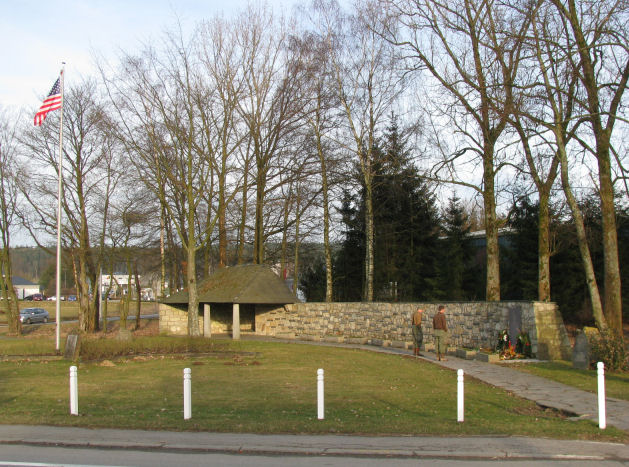
location where the infamous "Malmedy
Massacre" took place on the 17th
of December 1944, is marked
incorrectly as "on this spot" on the
monument in honor of the killed US
Servicemen.
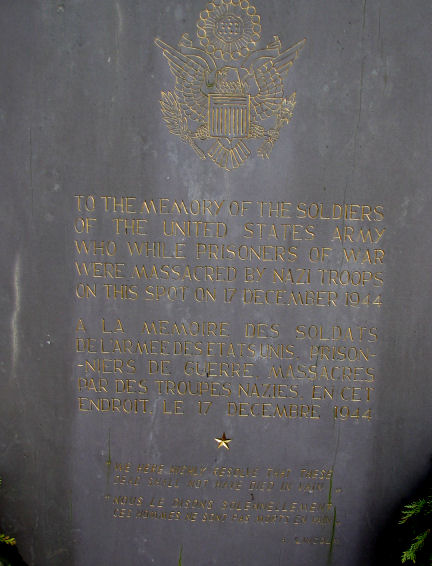
(click on the image
to enlarge)
Malmedy Massacre Memorial
SYNOPSIS:
A classic example of a war crime
investigation is the Malmedy
Massacre case. Much has been written
about the incident and the ensuing
investigation and subsequent trial.
The incident is reenacted in
Hollywood productions as "Battle of
the Bulge" and "Saints and
Soldiers".
In this study we show the
exact location where the incident
took place.
DETAILS:
There are several accounts of what
happened.
American publications published
shortly after the incident (Yank
Magazine) or after the ending of
World War Two, all describe the
shooting and killing of American
Prisoners of War as a deliberate act
of the SS troop spearheading the
December 1944 Nazi Ardennes
Offensive.
(click to open
articles)
1) 2)
2)
1) January 26th
1945 Yank Magazine article on
Malmedy Incident
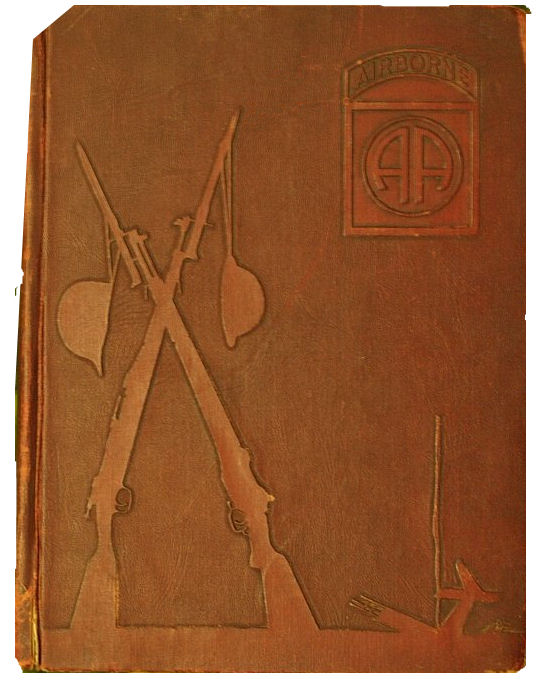
2) Saga of the All American,
History of the 82nd Airborne
Division
Postwar investigations led to other views on the incident.
We publish the three
leading post-war scenarios.
(Taken from Jean Paul Pallud's 1984
"Battle of the Bulge Then and Now".)
Scenario 1 "The Official Account"
This is the explanation of the
sequence of events that was given by
the prosecution at the post-war
trial held at Dachau, Germany, of
those alleged to have been
responsible. There it was explained
that after having surrendered, the
American prisoners were gathered in
a field beside the road and guarded
by armoured vehicles and grenadiers.
A German officer (sometimes
identified as SS-Sturmbahnfuehrer
(Major) Werner Poetschke) arrived
with the bulk of the armoured
column. This officer then ordered
that the prisoners be killed, the
actual command being initiated by
the gunner of Panzer IV No. 731, SS-Sturmmann
Georg Fleps, who reputedly fired the
first shot with a pistol.
Scenario 2 "POW's mistaken for US
combat troops"
This account leads one to believe
that, as the prisoners had been left
in the field under only light guard,
they were on the point of taking up
arms again when the main body of
Kampfgruppe Peiper came on the
scene. Mistaking the men for
combatants, the German troops opened
fire as they approached.
Scenario 3 "The Escape Theory"
While the Germans were otherwise
engaged with their vehicles,
possibly carrying out running
repairs preparatory to pushing on
through enemy territory, the
American prisoners took the
opportunity to make a break. A
German fired a warning shot with his
handgun whereupon panic broke out on
both sides, the grenadiers opening
up with machine guns.
While the first explanation - the 'official' version
- may appear
fairly plausible, the detailed
statements given at the trial are
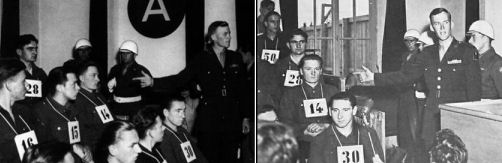
somewhat unconvincing. Lieutenant Lary was photographed pointing out
the culprit who fired the first shot
as Georg Fleps who is seen, scrubbed
and clean-shaven, sitting in the
dock. At the time, Lary only had a
few moments to see who had fired
first in the meadow - a man who was
then most probably muffled up in
heavy winter clothing, unshaven and
dirty. Could he safely identify such
a man two years later in completely
different surroundings? And why
should a tank gunner open fire with
a pistol when he had a much more
effective weapon - the tank machine
gun - at his disposal? And why, if a
premeditated massacre, would half
the prisoners standing in that field
have survived?
Further reading
A very comprehensive article about
the event and the ensuing trial was
written by Michael Reynolds and
appeared in the February 2003 issue
of World War II magazine. For the
online article click
here.
CONCLUSIONS:
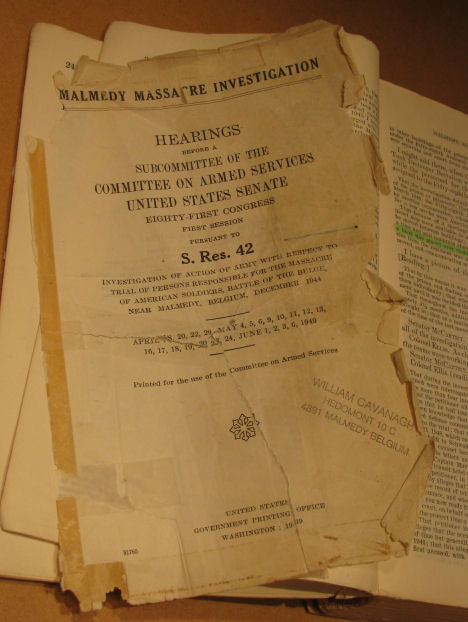
We have studied the official report
of the Malmedy Massacre
Investigation, numerous photographs,
film footage and other literature on
the subject. We also visited the
location of the incident in Belgium.
It is our opinion that what has
actually happened will never be
absolutely certain. What we can
reconstruct from all available
evidence is that a short skirmish
took place between the lead elements
of Kampfgruppe Peiper and the
American soldiers before the latter
surrendered. The Americans were all
members of support and medical units
and therefore lightly armed. Side
arms would have been .30 caliber M1
carbines and .45 caliber automatic
pistols and perhaps some .50 caliber
heavy machine gun mounted on the
trucks. The German soldiers in the
Kampfgruppe formed the spearhead of
the Ardennes Offensive and were by
nature heavily armed. The Americans
understood their options and choose
wisely to surrender.
There are German accounts describing
the short firefight and they
describe machine gunners firing into
the ditches alongside the road. It
is known that G.I.'s took cover in
these ditches. Undoubtedly, there
must been Americans killed in action
in that firefight. There are no
doubts about the survivors and the
wounded being herded into the
pasture South of the Cafe Bodarwe.
It is a known fact that the American
soldiers were scared after what had
happened to them. The fact that
someone fired to shots, is confirmed
by both American and German sources.
It is also acknowledged that these
shots had the effect of a starting
signal to open fire with
machineguns, mounted on the German
vehicles at a very close range.
Much to their frustration,
dismounted members of the German
guard detail must have watched other
German elements advance toward their
objective.
They were under orders to wait for
the infantry to collect the American
POW's. Although there is no hard
evidence of it, it is generally
assumed that Peiper had instructed
Major Werner Pőtschke: "You
know what to do with prisoners!"
This command could either mean
sending POW's to the rear or to
shoot them. Group dynamics may have
caused the German soldiers to reason
that, after the first few prisoners
were shot, it would be appropriate
to kill them all as to not leave any
witnesses to the incident.
If that was their intention, they
did a sloppy job. There were
survivors and their accounts of the
incident grew to mythical
proportions. Within twenty four
hours, the death toll under US POW's
would be well in the hundreds.
During the Malmedy Massacre
investigation, confessions are said
to have been
obtained through the use of force by
the American interrogators. This
caused the court's verdicts to be
reviewed. But it nevertheless leaves
the main accusation untouched. A
group of American soldiers was shot
and killed after they had
surrendered and were disarmed.
|
|
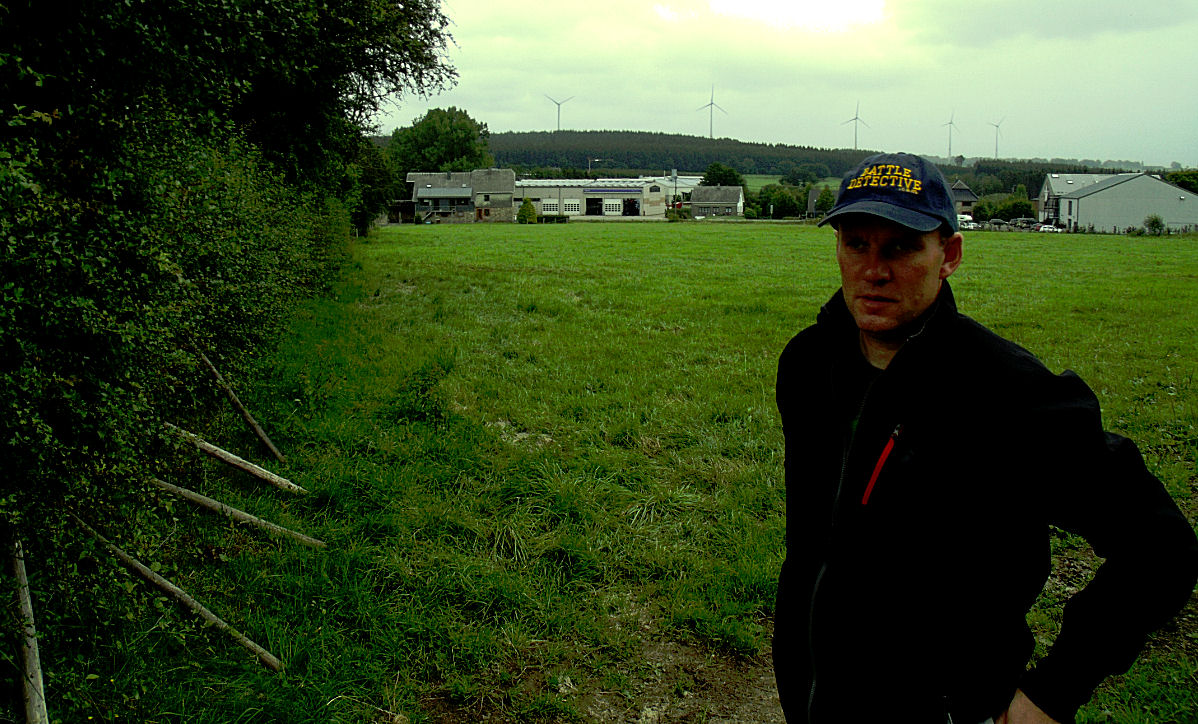
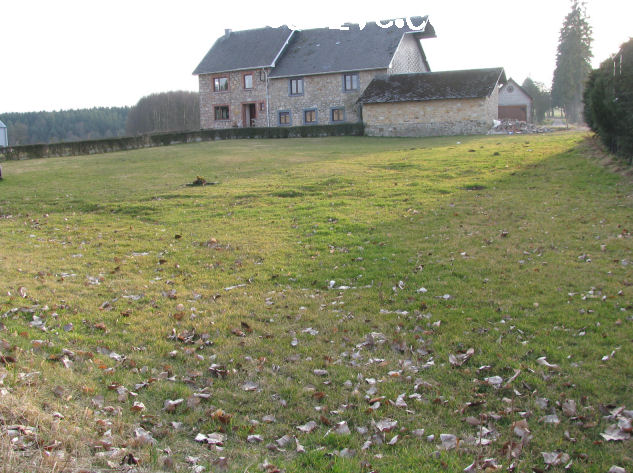
On February 23rd 2008,
Battledetective.com visited the
exact location of the field in which
most of the massacre victims fell.
After the first volley of fire, the
G.I.'s made an escape attempt in the
direction of a tree line on a slope
in South Western direction. Several
escapees were then shot in the
fields leading to that tree line.
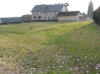
This is the field:
(click on image to
enlarge)
|
EXHIBITS:
Although the monument marker says:
"on this spot", the actual location
on the massacre is across the road.
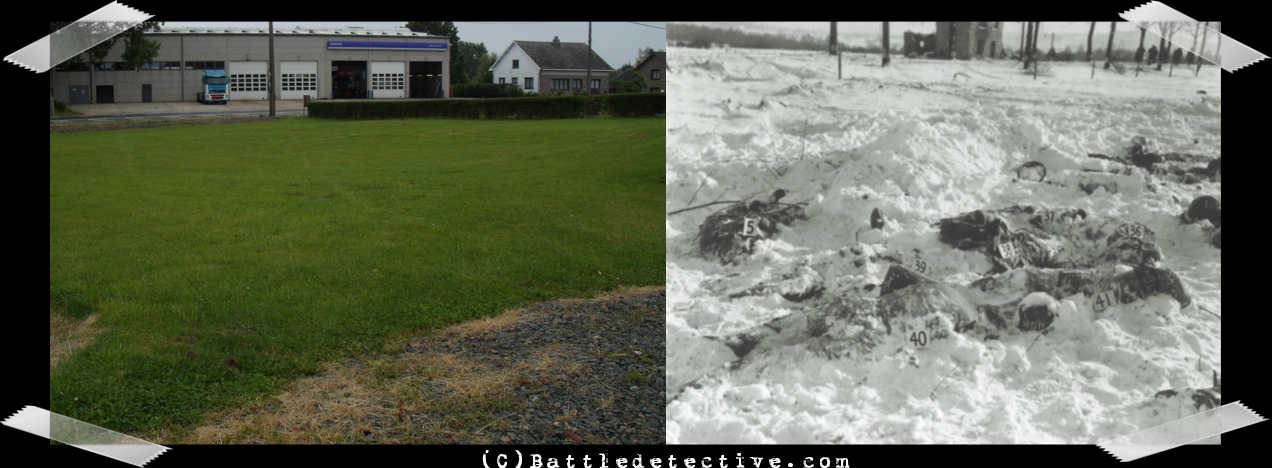
This is an impression of the
location in Then and Now comparison
photographs: |
|
(click on images to
enlarge)
 |
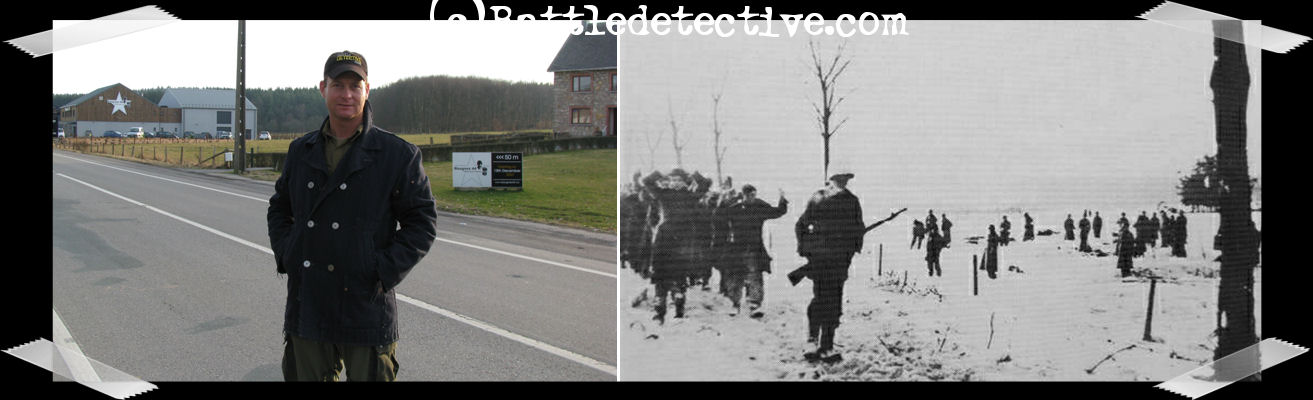
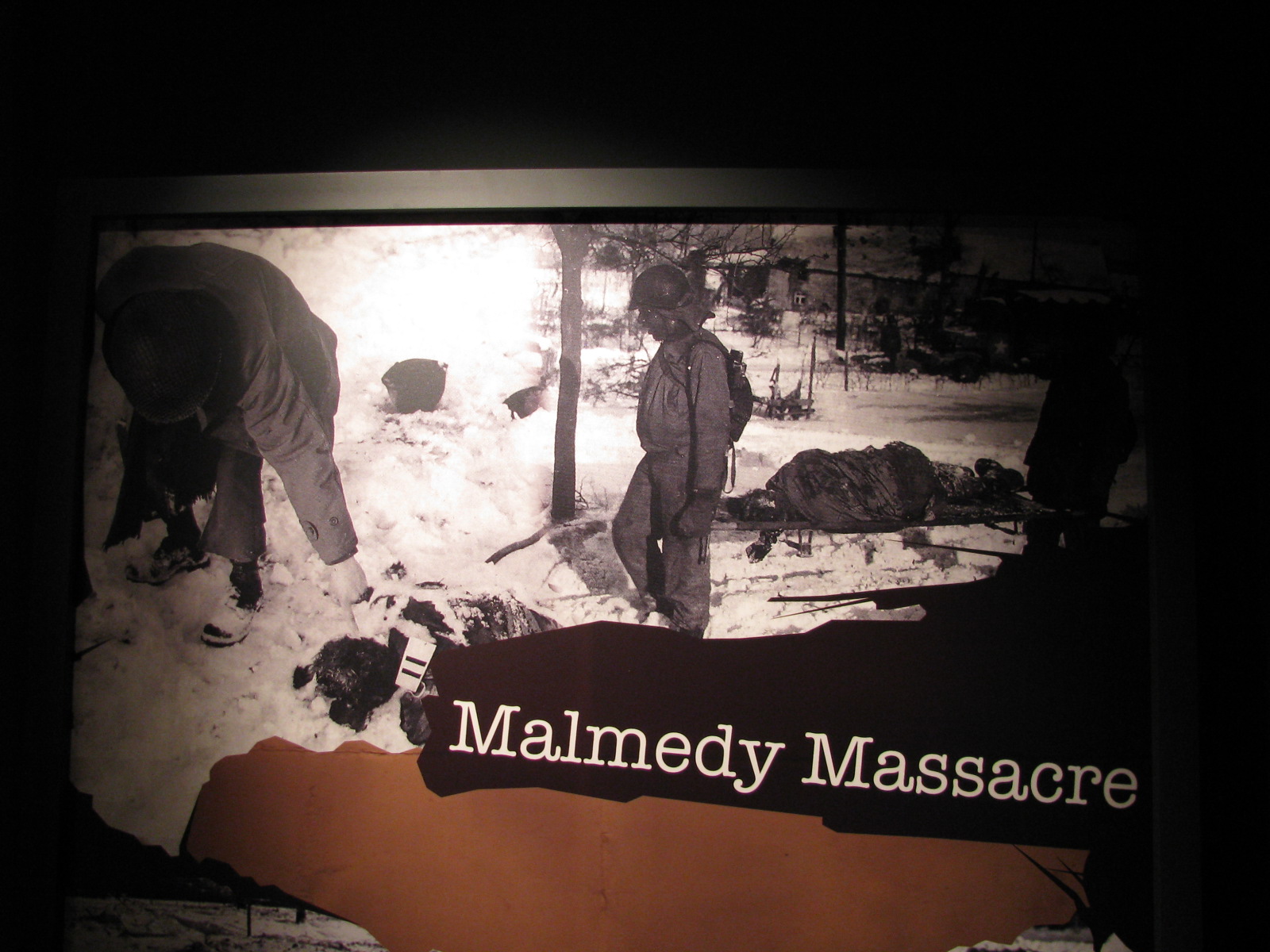
The massacre field minutes after the
crossroads at Baugnez had been
recaptured by US forces in January
1945.
The sign reads "off limits". The
recovery of the remains of the
victims will start shortly after
this photo had been taken. |
 |
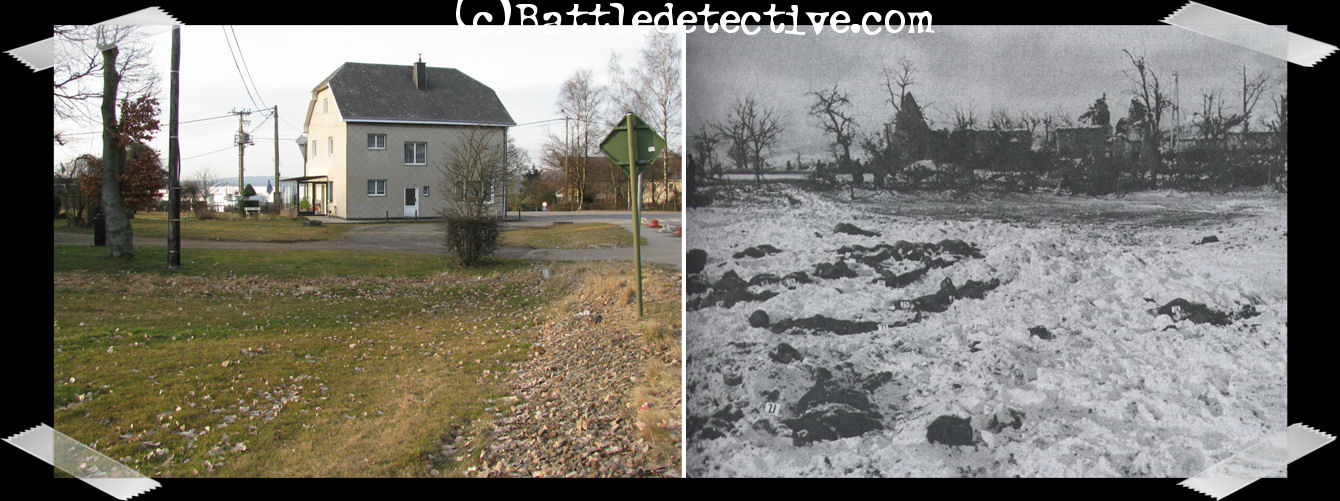
Some of the victims with numbered
tags for identification and
investigative purposes. In the
"Now-"photo the Baugnez Museum can
been in the background. |
 |
More American dead in the killing
field. The helmet with the
abbreviation “M.G.P.” lying in the
foreground belonged to a soldier
from Reconnaissance Company, 32nd
Armored Regiment, 3rd Armored
Division led by 1LT Thomas McDermott
out of Stolberg, Germany. That area
was already captured by the US Army.
MGP means Military Government
Police, charged with keeping order
in occupied German territory. |
 |
Nazi paratroopers taken prisoner are
led past the massacre field.
American Grave Registration and
medical personnel stop their work
and watch the prisoners. |
 |
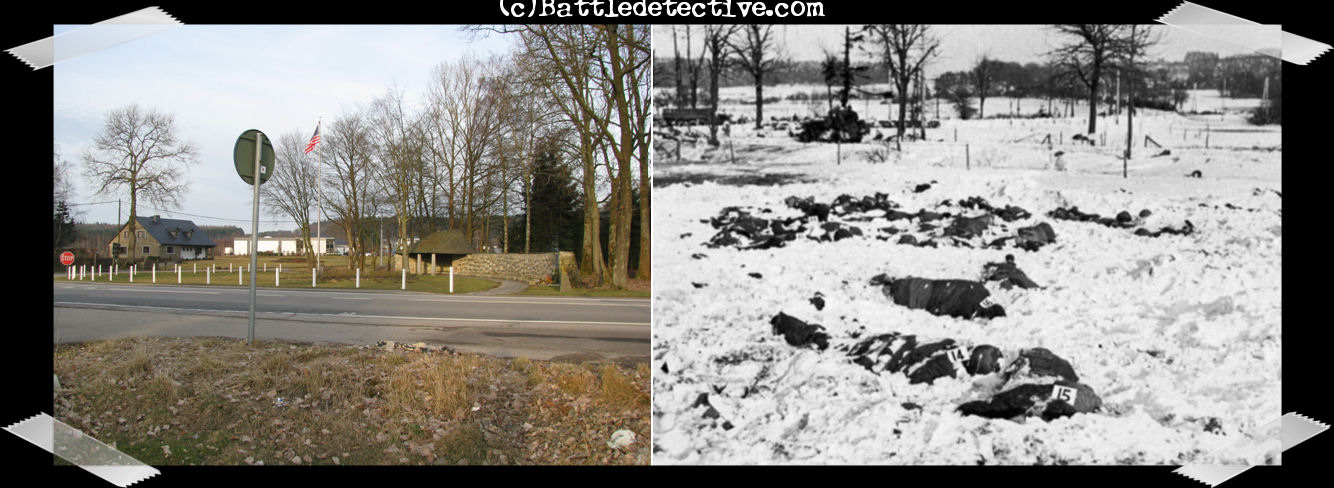
The field with the burnt-out Cafe Bodarwe in the back ground. Today
there is a new building on the same
location. |
 |
Field with the location of the
post-war monument in the back
ground. Proof of an error in the
inscription of 'on this spot' on the
monument. |
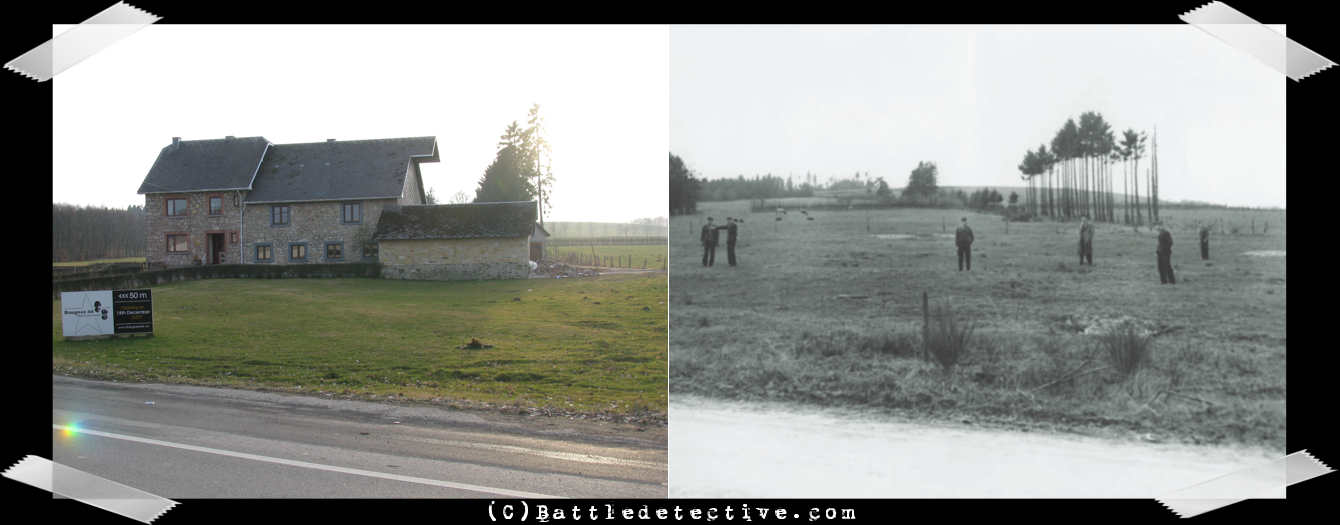 |
Post-war investigation in the field
with survivors of the massacre in
the field where the American POW's
were killed. A modern-day house has
been constructed in the field and it
has a sign in it pointing to the
nearby Baugnez '44 Museum. |
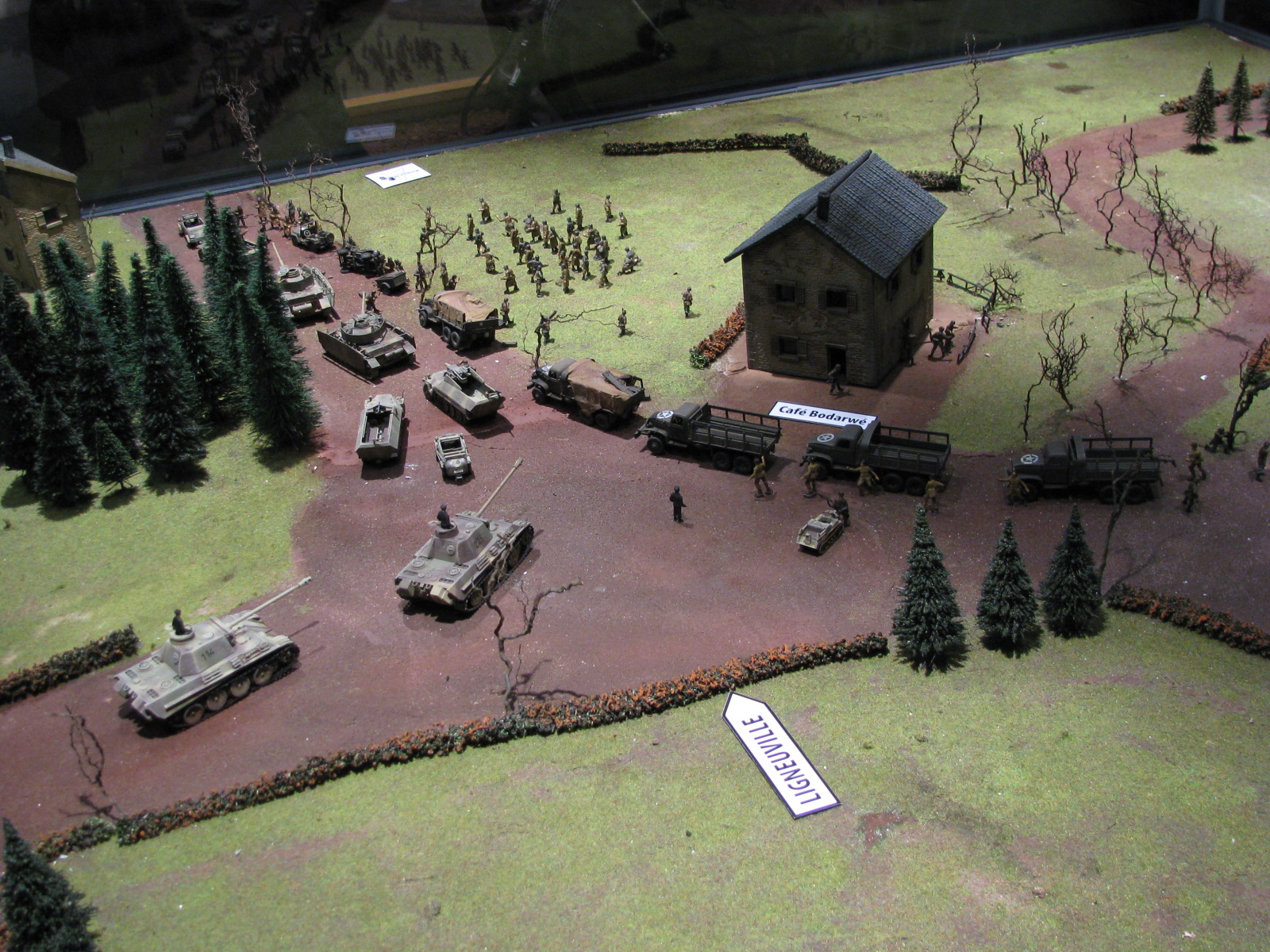
Approximately 100 yards south of the
location is a new museum named
Baugnez44. It was officially opened
in December 2007 and features
weapons, uniforms, vehicles,
photographs, film footage and other
items which all tell the story of
the Battle of the Bulge. The museum
puts a certain emphasis on the
Malmedy Massacre in various
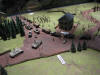
displays. There are scaled dioramas
and a life size impression of what
the field must have looked like
before investigators started to
recover the bodies of the killed
GI's in January 1945.
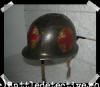
This is an impression of what the
museum shows about this subject:
|
|
(click on images to
enlarge)
  _small.jpg)   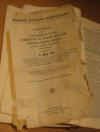
|
|
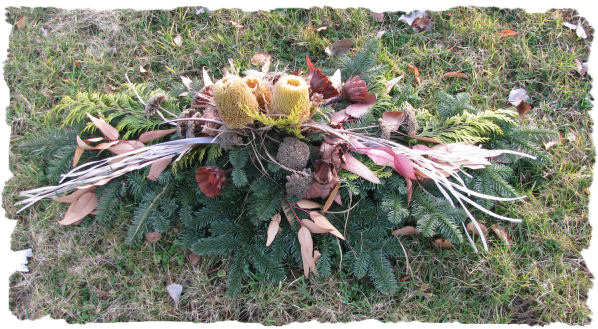
Bouquet in the middle
of the massacre field |
April 7th, 2010 UPDATE:
U.S. Army Major Scott T. Glass'
article titled "Mortuary Affairs
Operation at Malmedy, Lessons
Learned From A Historic Tragedy",
published in Quartermaster
Professional Bulletin in their 1997
autumn issue, gives us a
comprehensive insight in the way the
3060th Quartermaster Graves
Registration Service Company
conducted their recovery and
identification work after the
massacre field was recaptured by
friendly forces in January
1945.Their job resembled much that
of modern day crime scene
investigators, medical examiners and
crime lab technicians.
Although MAJ Glass focuses on the
work of today's army in a Mortuary
Affairs Collection Point (MACP),
comparing the job of the 3060th at
Malmedy with the guidelines set
forth in modern procedures - Joint
Publications 4-06 to be specific -,
his analysis is of historic value;
especially in light of "combat scene
investigation".
The article has these paragraphs
that are interesting for this Battle
Study:
"The 3060th Quartermaster Graves
Registration Service Company's 4th
Platoon [...] arrived in the
MALMEDY area and entered the
massacre site on January 13, 1945,
immediately after US units had
recaptured the crossroads area.
[...]
Operations began at the massacre
field on January 14, 1945, and ended
late the next day.
Throughout the operation, the
recovery field remained a frontline
combat area. The US Infantry had dug
foxholes across a corner of the
field, and German artillery
observers could see the activity
around the crossroads area.
On
several occasions, incoming German
artillery fire forced temporary
suspension of work. In some cases,
the shelling mangled some of the
remains, complicating recovery and
identification.
[...]
Litter teams from the 3200th
Quartermaster Service Company and
the 291st Engineer
Battalion carried the remains
several hundred meters on a road
leading to MALMEDY to a point secure
from German observation. There the
teams loaded the remains onto trucks
for the short trip to the processing
site.
[...]
The 3060th set up processing
operations in an abandoned railway
building in MALMEDY The building had
bombing and artillery
damage to its roof and walls and had
no running water and no electricity
to permit night operations.
However,
it was the best available facility
which combined space, proximity
to the recovery site, security and
access to operation support.
Processing operations ceased at
nightfall. Other advantages of the
railway building included a tile
floor for
laying out the remains and the
building's relative obscurity, which
sheltered it from public view.
The
temperature inside stayed little
above freezing, and workers had to
set up
several coal-burning drums to
provide some heat. Upon entering the
railway station, 3060th
Quartermaster Company workers placed
the remains on the tile floor and
then moved them
to tables for processing.
[...]
A survey of the 72 autopsies and
photographs of remains on file
indicate at least 20 had potentially
fatal gunshot wounds to the head
inflicted at
very close range in addition to
wounds from automatic weapons.
Most
head wounds showed powder burns on
the remains' skin. An additional 20
showed evidence of small caliber
gunshot
wounds to the head without powder
burn residue. Another 10 had fatal
crushing or blunt trauma injuries,
most likely from a German rifle
butt. This easily confirmed US
suspicions that
a serious atrocity actually did
occur.
[...]
Lessons Learned
---------------
The Malmedy Massacre happened 52
years ago. Although Quartermaster
mortuary affairs doctrine has
undergone many changes since then,
lessons learned from the operation
still apply to
operations today.
[...]
Work Site Selection.
Several factors prevented using
large buildings near the recovery
site as a primary workplace.
First,
the site remained under German
aircraft overflights, observation
and intermittent
artillery fire. Second, a smaller
railway building with some heat
source would greatly ease the cold
conditions for soldiers performing
the processing operations. Third,
the railway building
in MALMEDY was much closer to the
barracks and mess facility
supporting the workers. Fourth, the
smaller building's location was
easily protected from public view.
Fifth, the road network of Malmedy
could be easily accessed from the
railway building. Although not a
perfect site, the railway building
offered the best combination of
advantages and the fewest
disadvantages.
Using Joint Publication 4-06
checklists as a yardstick, the MACP
building satisfied most of today's
requirements." |
|
In december 2009,
Battledetective.com visited the
railway station building of Malmedy.
We found the rail road tracks
abandoned and the steel rails
removed. The building still looks
like the one in 1945 as seen on a
period photo:
 |
|
The building is on a bus terminal
serving the area around Malmedy.
An impression of the building and
surrounding area:
(click on the images
to enlarge)
_small.jpg)
_small.jpg)
_small.jpg)
 |
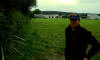
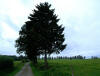
August 25th, 2012 UPDATE:
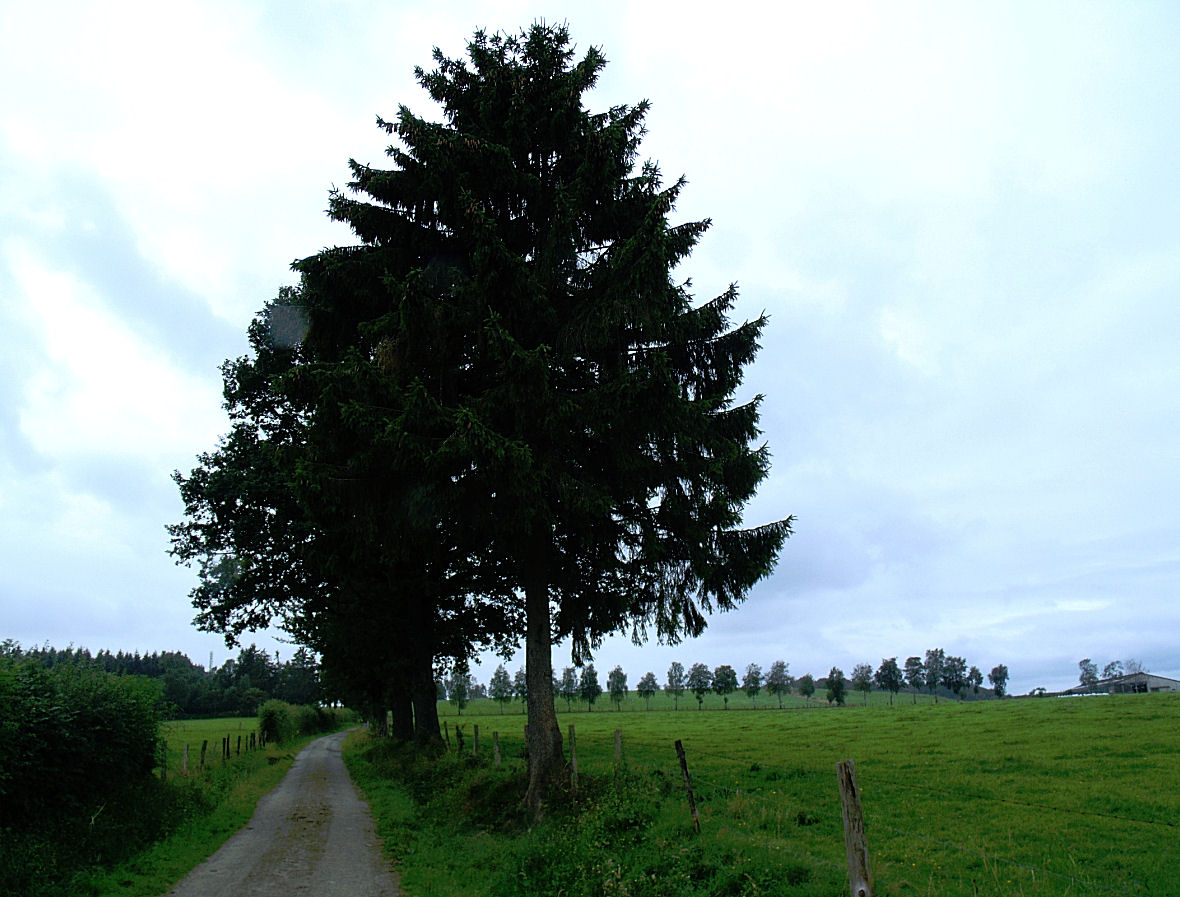
We have visited the combat scene
once again and this time we took
images of the most likely escape
route of the American survivors from
"B" Battery,
285th Field Artillery Observation
Battalion.
|
|
(click on the images
to enlarge)
1)  2)
2)
_small.jpg) 3)
3)
4)
_small.jpg) 5)
5)
 6)
6) 
|
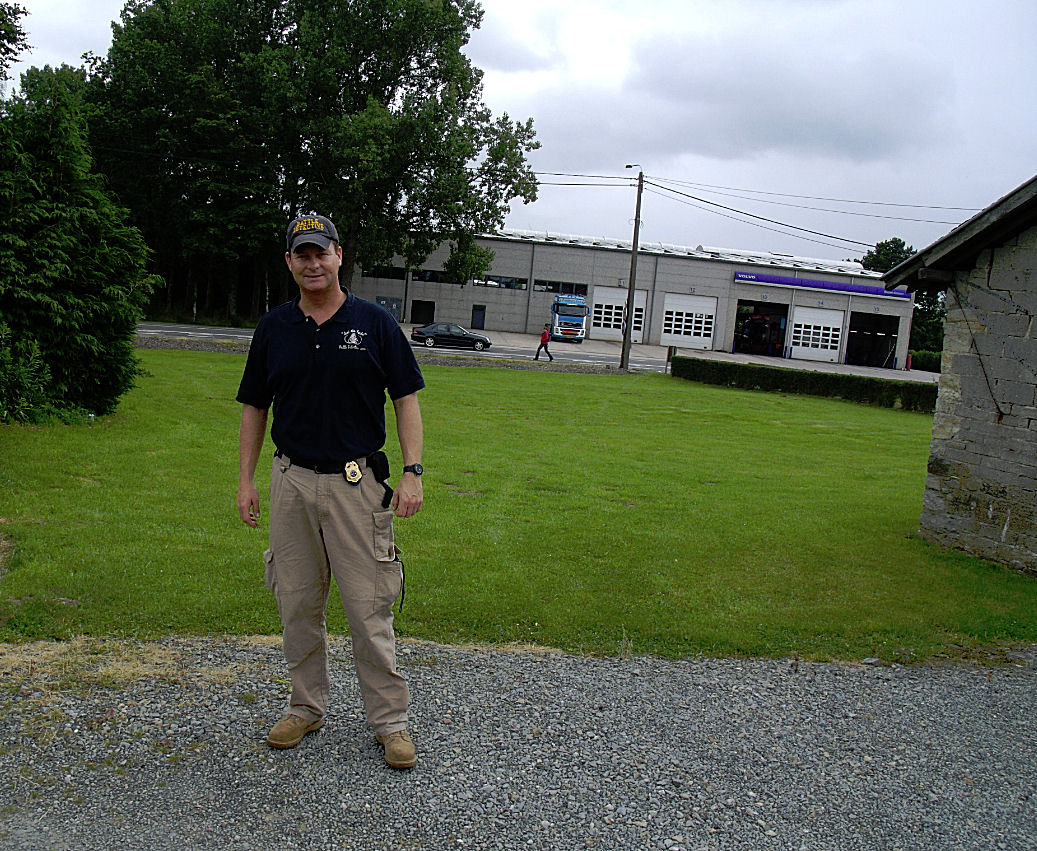
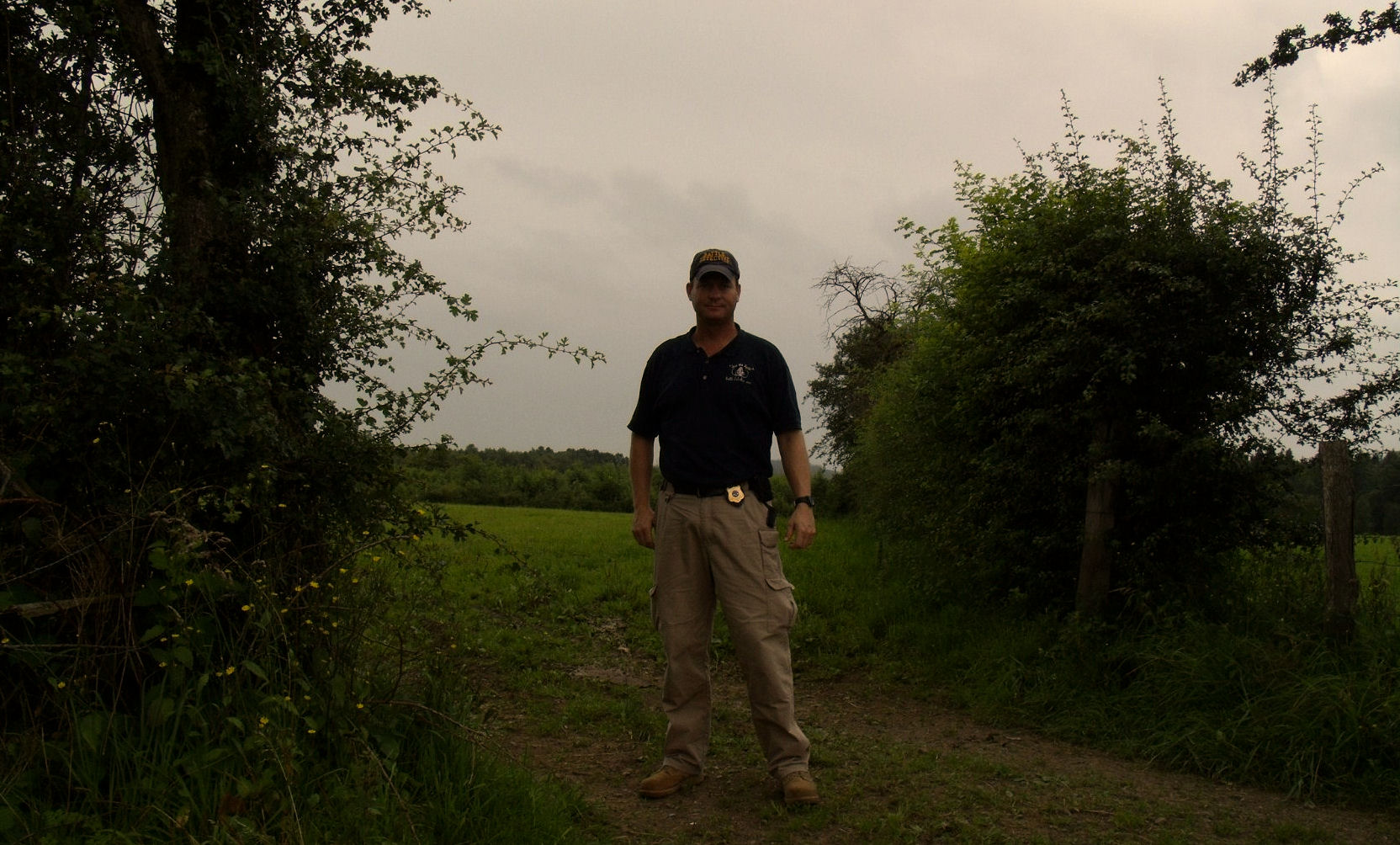
1&2) Standing on
the opposite (west) side of the
massacre field.
3&4) Further up the sloping hills
away from the road junction
with the Bodarwe Cafe.
5) Battle Detective Kees in the
pasture looking down East towards
the N62 Highway.
The Baugnez Malmedy Massacre Museum
is just to the right.
6) A rural road, locally known
as "Houyire" looking west and away
from the massacre field.
According to us this is the most
likely escape direction of survivors
of the Malmedy Massacre. |
|
January 31st, 2014 UPDATE:
We are now convinced that some of
our conclusions as published above
are wrong.
After reading the 2012 book named "Fatal Crossroads, the untold story
of the Malmedy Massacre at the
Battle of
the Bulge", by Danny S.
Parker we are convinced that the Malmedy Massacre was not a
"battlefield incident"
in
the heat of combat but deliberate
murder.
The following summary of Parker's
investigation in the book's
Appendix IV "Malmedy: in search of
the truth",
pages 278 to 280, proves
this.
|
|
  |
|
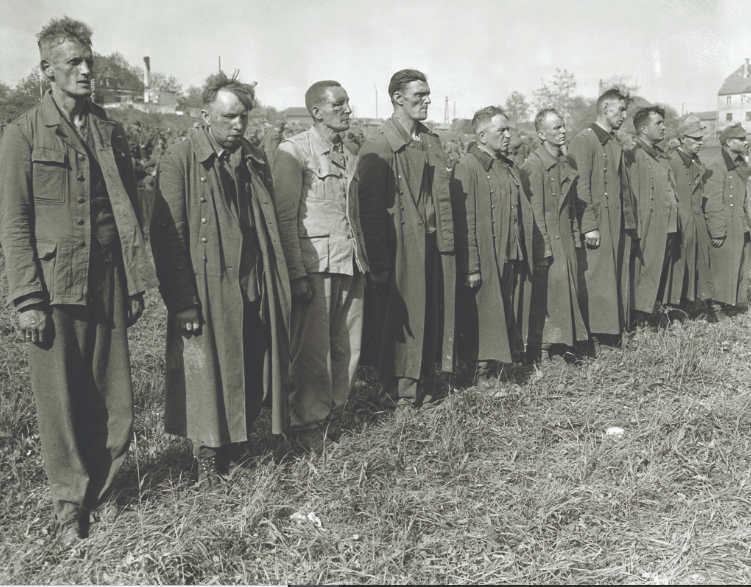
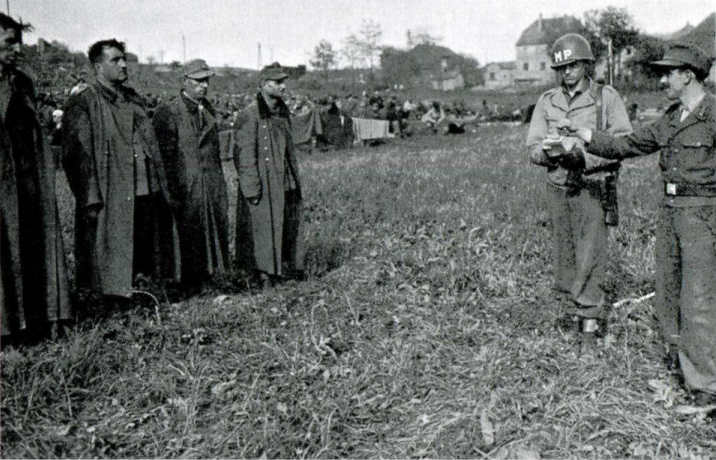
"Combat Scene
Investigation.
A German witness points towards
SS-men during a line-up on the site
of the massacre.
An American Military Police man
takes notes. |
"The [...] possibility [...] the most
likely for this author - is that a
deliberate battlefield decision was
made to execute the prisoners. This
likely resulted from Peiper's orders
for maximum speed combined with the
difficulty of evacuating the large
number of GIs without a loss to the
striking power of the spearhead.
[...] As has been shown in the
author's own research, it is quite
true that a small group of three to
four Americans attempted to flee the
scene just as the first shots were
fired. However much this behavior
might complicate matters, the fact
remains that the SS men on the
halftracks in front of the Americans
were sighting machine guns and
preparing ammunition for the
anticipated shooting to come. The
execution detail was in its final
stages - made crystal clear by the
earlier failed attempt to train a
halftrack-mounted 7.5-cm howitzer on
the Americans to aid in their
liquidation. Over a dozen American
witnesses remembered how the enemy
had strenuously endeavored to train
the big gun on the men standing in
the field. Others watched as machine
guns were mounted on the side of the SPWs so their muzzles could be
trained on the increasingly nervous
crowd. Although charges of "poor
military discipline" might be
leveled, those few who ran were
perceptive enough to recognize a
fatal threat. Two survived. |
|
(click on the images
to enlarge)
1) 2) 2)
 |
|
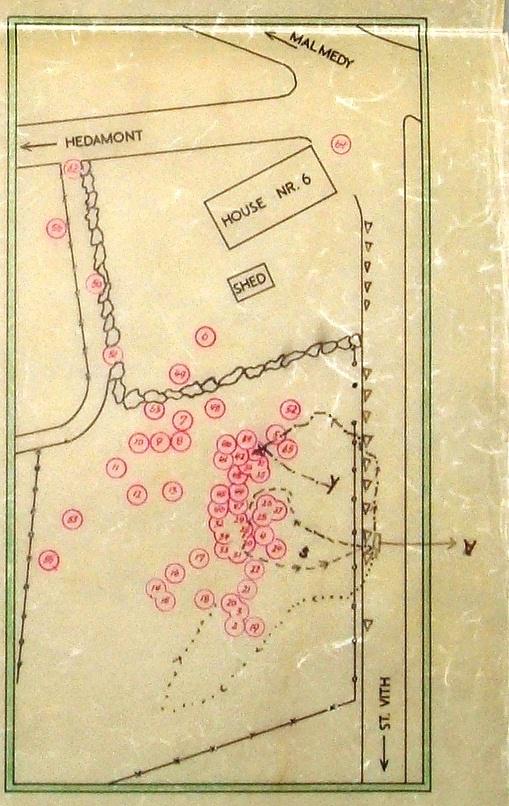
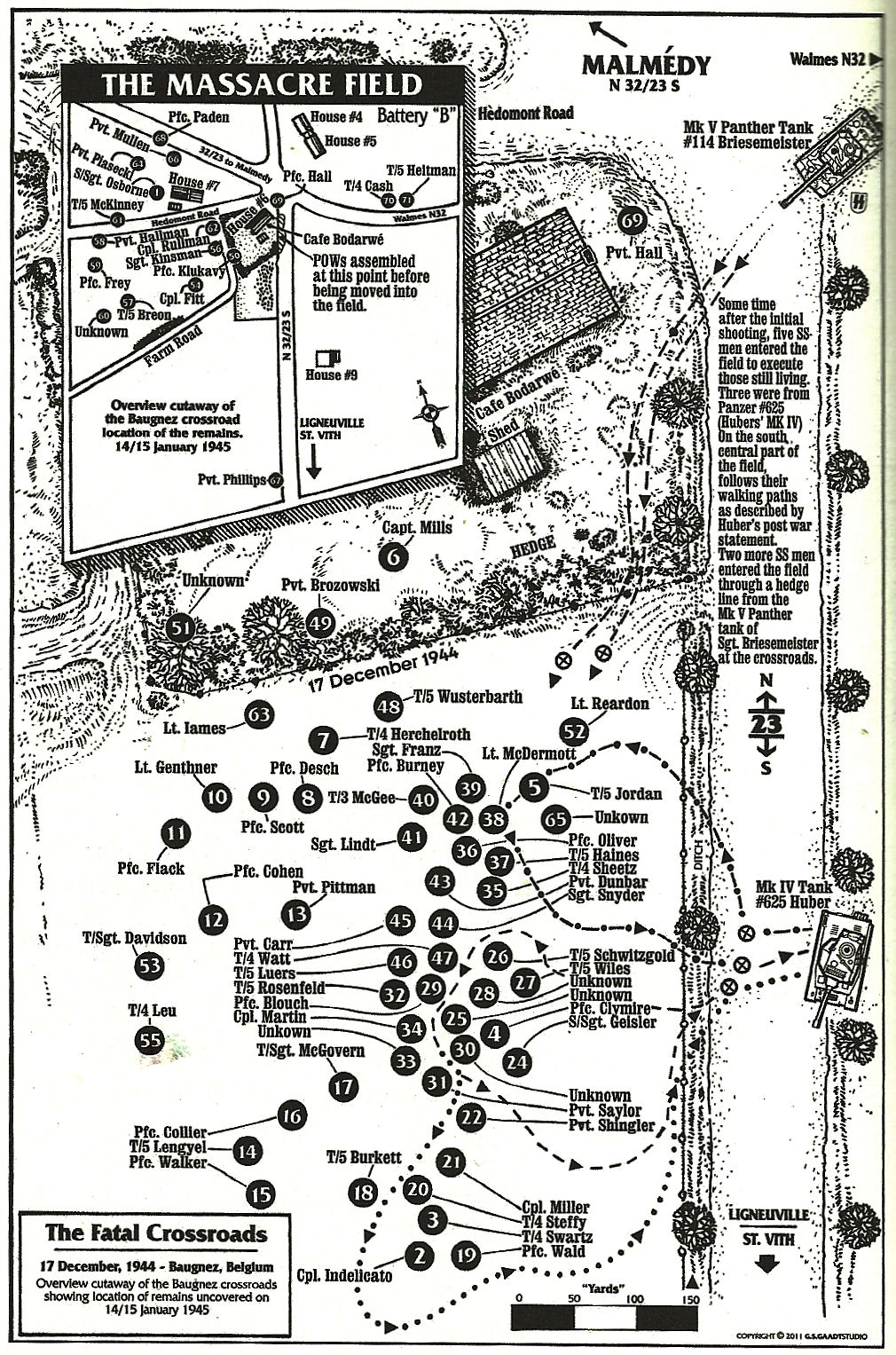
1) Diagram of the massacre
field from the Malmedy Massacre
Investigation 2) Diagram
from "Fatal Crossroads" with the
names of the victims and the routes
of the SS-killers.
(c) G.S. Gaadtstudio |
Two additional facts obliterate
justification for Peiper's men's
behavior at the Baugnez crossroads.
First there is the fact that eighty
men were shot down in addition to
those few who tried to escape.
Moreover, the bodies of some of
these men were found frozen a month
later, many with their hands still
raised over their heads in the
universal posture of surrender. The
mass of Americans were brutally shot
down by automatic weapons fire while
massed in the field. Except for a
few at the rear of the group, none
of the others were moving or
attempting to escape. Surely a
single accidental trigger-happy
pistol and machine gun would not
fell eighty men and leave none
wounded to be taken prisoner. And if
the mass of Americans had all
attempted to run, more than half the
bodies would not have been found in
a dense tangle of bunched-up corpses
twenty yards from the road and
compressed in an ellipse of death
barely forty yards wide.
|
Although a number of men were found
away from the main mass of the
bodies, by far the most frequent
cause of death -as determined by
autopsy- was from a point-blank shot
to the head. These were largely men
who lay in the field for an hour
after the shooting before the
attempt to escape after one survivor
yelled, "Let's go!" German machine
guns from Kurt Briesemeister's
Panther Nr. 114 fired once more upon
those who ran at that time. That
tank had remained behind at the
crossroads to repair track damage.
[...]
Three U.S. Army surgeons performed
detailed autopsies on the dead men
in the field in January 1945,
revealing that many had been
executed by shots to the head or
neck shots so close that the
autopsies revealed powder burns. To
shoot a mass of unarmed prisoners
must generally be considered a war
crime. However, to shoot down a mass
of prisoners and then move through
the field to execute any surviving
the first onslaught -and not take
these prisoners- must be considered
a war crime under every rational
classification.
As to the genesis of the SS
decision to execute the prisoners,
the most likely explanation is one
of battlefield expediency. Then,
too, there is the moribund ethos in
Kampfgruppe Peiper. In Russia these
men had long practiced a way of
battle that had little value for
enemy life. As all accounts agree,
Peiper arrived on the scene with the
prisoners being collected, but he
was in a terrible hurry to attempt
to capture the American headquarters
just ahead in Ligneuville. To test
Peiper's patience, there were also
lollygagging SS troopers looting the
American convoy and several broken
down German armored vehicles.
Peiper's armor had little infantry
to spare to guard prisoners, and he
made sure all under him knew that no
delay would be tolerated. Peiper met
Werner Poetschke at the crossroads
and conferred in a heated encounter.
|
Their auspicious meeting took place
moments before Peiper roared off
behind the Mk V Panther of Arndt
Fischer. In his wake he left the
mass of American -prisoners standing
with raised hands. Minutes later
they were shot. Thus, Poetschke, on
his own initiative, may have been
the one who ordered the prisoners
liquidated. There was also further
aggravation for him - namely, the
frustrating refusal from the
Americans to drive the abandoned GMC
trucks for the German column. The
orders to shoot the Americans then
moved from Poetschke to Max Beutner
and Erich Rumpf, who were assigned
to the 3rd and 9th Panzer Engineer
Companies, respectively, and
commanded the gun crews who were
present on the armored halftracks
there.
However, the possibility
cannot be ruled out that Peiper
himself ordered Poetschke to have
the American's shot before he
departed the crossroads. Whereas
many SS accounts lay the blame on
ordering the shooting at the feet of
Werner Poetschke - conveniently
deceased in Hungary in 1945- it
remains significant that before
being brought to Schwaebisch Hall,
Paul Zwigart, the driver in
Diefenthal and Peiper's command
halftrack, had something more to
add.
In a POW camp in Ebensee,
Austria, in summer 1945 Zwigart
confided to a doctor with the 7th
Panzer Company that the orders for
the shooting had come from Peiper
himself." |
CONCLUSION
With this publication, let there be
no doubt as to the intentions of a
deliberate murder on American
Prisoners of War by the SS-men
involved. |
|
|
|
Back to Battle Studies
 |
|
|
|
| |
| |
| |
| |
|







.jpg)

.jpg)
.jpg)
.jpg)
.jpg)
.jpg)
.jpg)